When Protection Feels Like Prohibition: What Young People Are Hearing in the Under-16 Social Media Ban

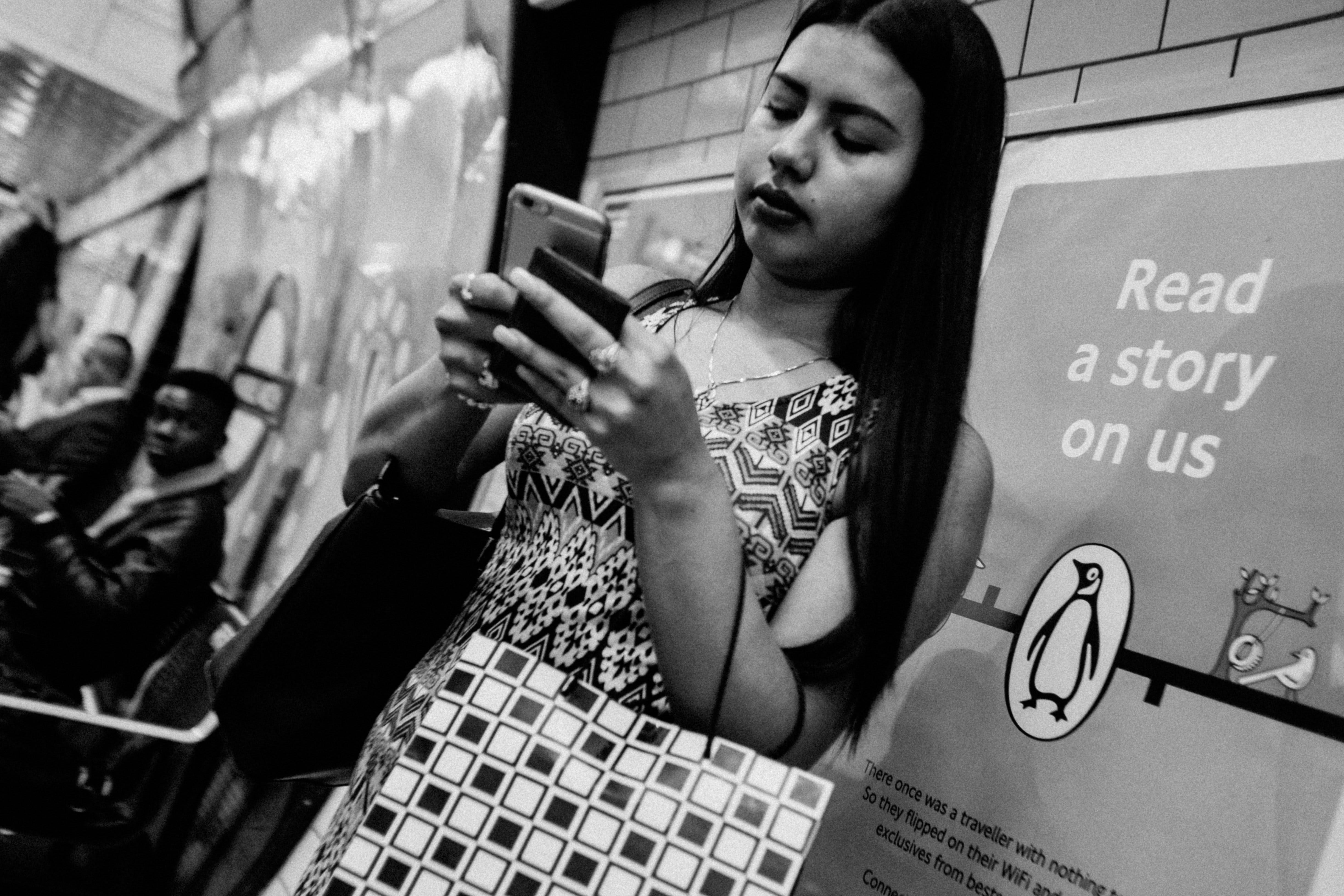
Photo by Emre Ucar on Unsplash
The Government may think it has announced a child protection policy, but many young people appear to be hearing something more complicated. They are hearing that adults do not understand their lives, that decisions are being made about them rather than with them, and that the online world they actually inhabit is being described in ways that feel clumsy, fearful and out of touch. They are also hearing a contradiction. Adults rely on social media for work, politics, shopping, news, campaigning, dating, parenting groups, humour and friendship, while telling children that these same spaces are too dangerous for them to enter.
That gap is the problem. The Government’s plan is now much clearer than it was a few months ago. It says social media companies will be banned from providing services to under-16s, that harmful functions on other online services, including gaming services, will be restricted for under-16s, and that 16- and 17-year-olds will face default restrictions on harmful functions. It also says rigorous age checks will be used to enforce these requirements. This is not a minor adjustment. It is a major attempt to reset children’s digital lives.
The public mandate is real, but it is more nuanced than some headlines suggest. The Government has used the line that “9 in 10 parents” backed an under-16 social media ban. In the published evidence, that figure appears closest to the self-selecting parent consultation, where 91% of parent respondents supported a minimum age of at least 16. The nationally representative parent panel was also strongly supportive, but lower, at 76%. That distinction matters. A public consultation can tell us something important about the views of people motivated enough to respond, but it does not prove that nearly all parents across the country have spoken with one voice.
Young people’s views were more mixed. In the evidence published by Government, parents and children differed clearly. Parents showed strong support for a minimum age of 16, while children and young people were more divided, with a full ban remaining a minority view among them. So this is not a simple story of parents wanting protection and children wanting unrestricted access. Many children know the online world can be harmful. Many have seen cruelty, pornography, violent content, misogyny, racism, humiliation, coercion, bullying, gambling-style mechanics, self-harm content and algorithmic rabbit holes. Some want adults to act. Some want platforms to be safer. Some want less pressure, not more. But agreeing that something is wrong with social media is not the same as agreeing that prohibition is the right answer.
This is where youth participation becomes more than a nice principle. Consultation is not the same as co-production. A young person can complete a survey, attend a discussion, or be asked for a view, and still feel that the real decision has been made somewhere else. FlippGen’s open letter to the Prime Minister makes this point clearly. It is not a simple rejection of online safety policy. It recognises that digital platforms affect wellbeing, mental health and development, and that action is needed. But it argues that thousands of young people engaged with the consultation in good faith and were then left feeling let down by an announcement made only weeks later, through communications aimed largely at parents rather than young people themselves.
That should worry policymakers, because a safeguarding policy that begins by deepening children’s sense of exclusion is already storing up trouble. The live sector response has been just as revealing. Youth workers, digital wellbeing campaigners, mental health charities, children’s rights organisations and online safety advocates are not all saying the same thing. Some welcome stronger action. Some think a ban may help shift social norms. Others warn that it could displace harm, narrow young people’s access to support, shift responsibility onto families, and let platforms off the hook. The parent mandate is real. The youth mandate is mixed. The participation problem is serious.
A policy designed to protect children can still fail if children experience it as illegitimate. If they believe a rule is unfair, technically naïve, politically motivated or disconnected from their real lives, they will not simply comply. They will interpret it, test it, share loopholes and build their own explanations about what adults are really doing. For some young people, getting around the ban may become part of the status game. For others, especially those already distrustful of authority, it may feed a wider sense that government, schools and parents are trying to control them rather than understand them.
There is already evidence from Australia that this is not a hypothetical risk. Research with young people aged 12 to 16 found that participants often saw social media age bans as unfair and ineffective. They learned how platform controls worked, identified weaknesses, and discussed how young people could evade them. That has obvious implications for safeguarding. The issue is not only whether children can be kept away from social media. It is where they go when the legitimate route is closed.
Some may stop using platforms. Some may benefit from the boundary. Some families may find it easier to say no. But others will move sideways into adult accounts, shared logins, proxies, VPNs, old devices, group chats, private servers, gaming spaces, livestreams or less visible platforms. The children most likely to do that are not always the safest children. They may be the lonely ones, the neurodivergent ones, the impulsive ones, the ones outside school, the ones being groomed, the ones chasing status, the ones using online spaces to practise friendship because offline friendship is hard.
For some disabled and neurodivergent children, social media is not just entertainment. It can be where they find peers, role models, identity, humour and ordinary teenage contact. It can be where a child who struggles in the playground finds a friend, where a rural teenager keeps in touch with people they rarely see, or where a disabled young person finds others who understand their body, their fatigue, their diagnosis, their anger and their jokes. None of this means doing nothing. It means refusing to pretend that protection and exclusion are the same thing.
It also means being precise about what we are talking about. “Social media” is being used as if it describes one activity, but it does not. A teenager scrolling TikTok alone at 1am, messaging a known friend on Snapchat, watching football clips on YouTube, joining a Discord server, arranging to meet friends through a group chat, posting art on Instagram, or following a disability activist is not doing the same thing, even if all of it happens through a screen. Some of those activities carry serious risks. Some are ordinary social life. Some are both. A blunt category can flatten the very differences safeguarding needs to understand.
Ofcom is right to say platforms have not properly enforced their own minimum age policies. The situation we have now is not defensible. Children have been left inside systems designed around engagement, recommendation, contact and data extraction, while parents are expected to hold the line with a patchwork of settings, passwords, arguments and hope. But age assurance is not magic. It is a technical layer placed on top of a social problem. It raises questions about privacy, trust, exclusion, accuracy, family conflict, domestic abuse, disability access and evasion. It may make some children safer. It may also teach others how to hide.
There is also the blame problem. In principle, the Government says responsibility sits with platforms. That is right. For too long, families have been expected to manage risks created by companies whose business models depend on attention, recommendation systems, social pressure and endless engagement. But in practice, when a 14-year-old is still on Snapchat at midnight through an adult account, an old phone or a proxy site, it will often be parents, carers, teachers and youth workers who are asked why they did not stop it. Families will be expected to enforce a system they did not design. Schools will manage the fallout. Youth workers will try to rebuild trust with young people who feel adults have once again spoken over them, while platforms may still profit from the architecture of attention.
There is a practical question here for charities, youth organisations and campaigners too. If mainstream social platforms become adult spaces, how will organisations reach young people with advice, support, peer forums, campaigning opportunities and crisis information? Many of the young people most likely to need support are not necessarily subscribed to newsletters, checking organisational websites, or attending formal services. A child in distress does not always search neatly for a service pathway. Sometimes they see a post. Sometimes they message a peer. Sometimes they follow a campaign because it speaks in a language they recognise. Sometimes the route into help begins somewhere messy, informal and digital. If we remove young people from those spaces, we need to be honest about what replaces them.
The better question is not whether children should have unlimited access to everything. They should not. The better question is what safety would look like if young people helped design it. Young people might not ask for unrestricted access. They might ask for platforms that do not push violent, sexualised or self-harm content into their feeds. They might ask for better blocking tools, real moderation, age-appropriate spaces, safer recommendation systems, limits on contact from unknown adults, meaningful reporting systems, and support when things go wrong. They might ask for adults who can talk honestly about sex, friendship, status, shame, pornography, humour, violence and risk without panicking. They might ask for digital youth work, not only digital punishment. They might ask why adults are allowed to build attention-capturing systems and then blame children for being drawn into them.
This is where Safe by Default offers a better frame. It shifts the focus away from prohibition alone and towards responsibility by design. It asks why children have to rely on willpower, parental vigilance, paid filters, technical knowledge or luck to avoid harm. It asks why safety is still treated as an optional layer rather than a basic condition of digital childhood. Safe by Default does not mean leaving children alone online. It means building digital environments where the safest settings are already in place, where risky contact is constrained, where recommender systems are accountable, where age-appropriate design is real, where families are not expected to be unpaid platform regulators, and where young people are treated as people with insight into their own lives.
A ban may help some children. It may give some parents a stronger boundary. It may reduce some exposure to harmful content. It may change social norms for younger children. Those possibilities should not be dismissed. But if young people experience the policy as something done to them, not with them, it risks creating secrecy, evasion and distrust. It risks making social media feel more adult, more forbidden and more desirable. It risks pushing some vulnerable children into less visible spaces, while cutting other children off from friendship and peer culture.
The Government may be trying to protect children from harm, but protection that young people experience as exclusion will not build trust, and without trust, safety systems fail. Children do not only need adults to set limits. They need adults to understand the world those limits are entering. They need adults to know the difference between a feed that keeps them awake and a message thread that keeps them connected. They need adults who can see risk without erasing friendship, pleasure, identity, creativity and belonging.
The lesson of this moment should not be that children are too difficult to protect. It should be that digital childhood cannot be made safe by removing young people from the conversation.
Sources and further reading
GOV.UK / DSIT, Summary of evidence document, June publication, June 2026.
Savanta / DSIT, Children’s Wellbeing Online: Social Media Quantitative Report, June 2026.
FlippGen, An Open Letter on Youth Voice and Digital Policy.
Madeleine Sugden, Responses to the under 16 social media ban announcement, 15 June 2026.
House of Commons Library, Proposals to ban social media for children.
Ofcom, Keep underage children off your platforms, March 2026.
Nansen et al., From Phreaking to Sneaking: Children’s Circumvention of Social Media Age Verification Systems, arXiv, 2026.
The Guardian, UK social media ban could cut lifeline for disabled children, campaigners warn, 16 June 2026.